
 Which Flexible Heater Fits -50°C to 400°C Duty?
A selection guide fo…
Which Flexible Heater Fits -50°C to 400°C Duty?
A selection guide fo…
UL 499 · IEC 60335 · UL 94 V-0 · RoHS · IATF 16949 · ISO 13485
Custom Heating Element Manufacturer
Silicone rubber, polyimide (PI) film, PET film, thick film on stainless and ceramic, PTC assemblies and epoxy heating plates — built to your outline, wound for your supply, and tested piece by piece before they ship.
- Full dimensional tables on every product
- Grades 8.8 / 10.9 / 12.9 and stainless A2 / A4
- Quotations answered within one business day
Constructions we build
Browse the catalog by category and standard. Every product page lists the full dimensional table, materials, finishes, structured data and a quotation path.
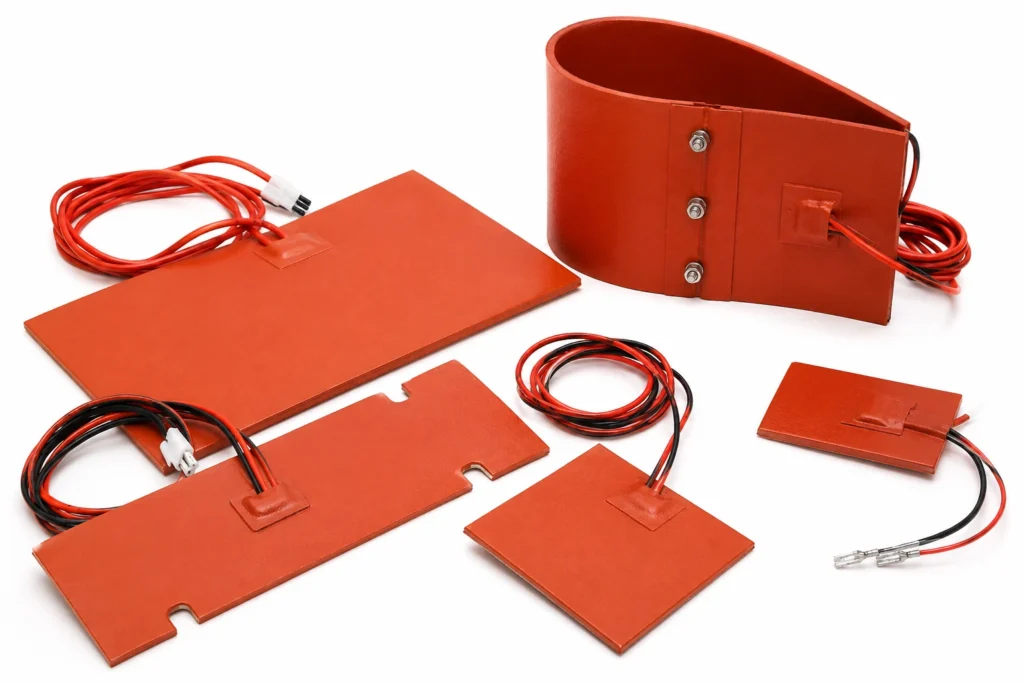
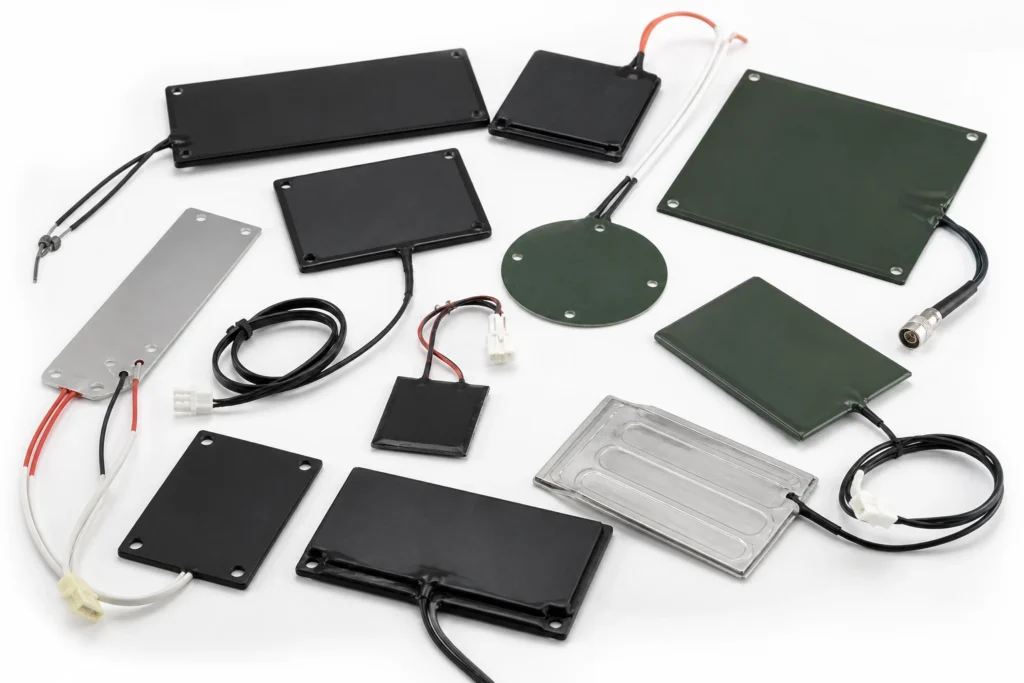
Silicone Rubber Heaters
Fibreglass-reinfor…
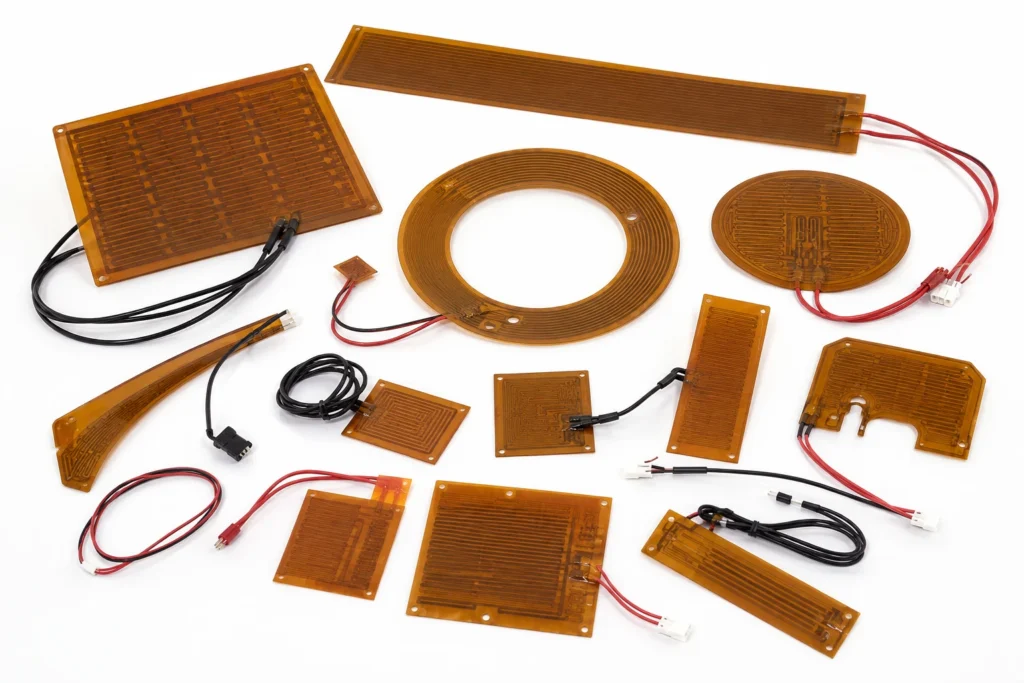
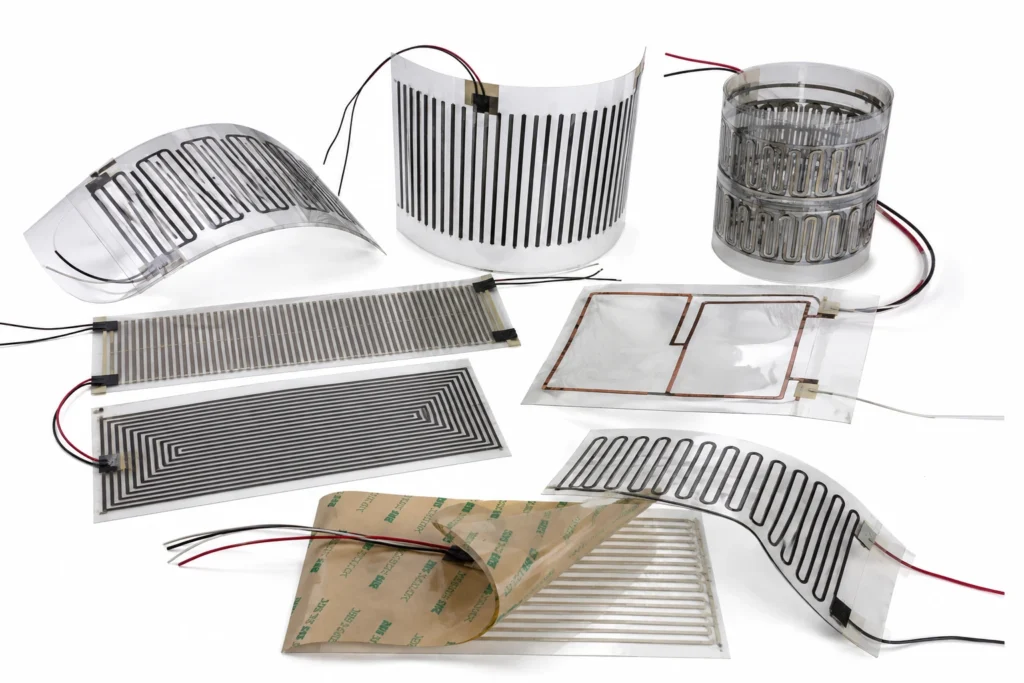
View standards →Polyimide (PI) Film Heaters
Etched-foil polyim…
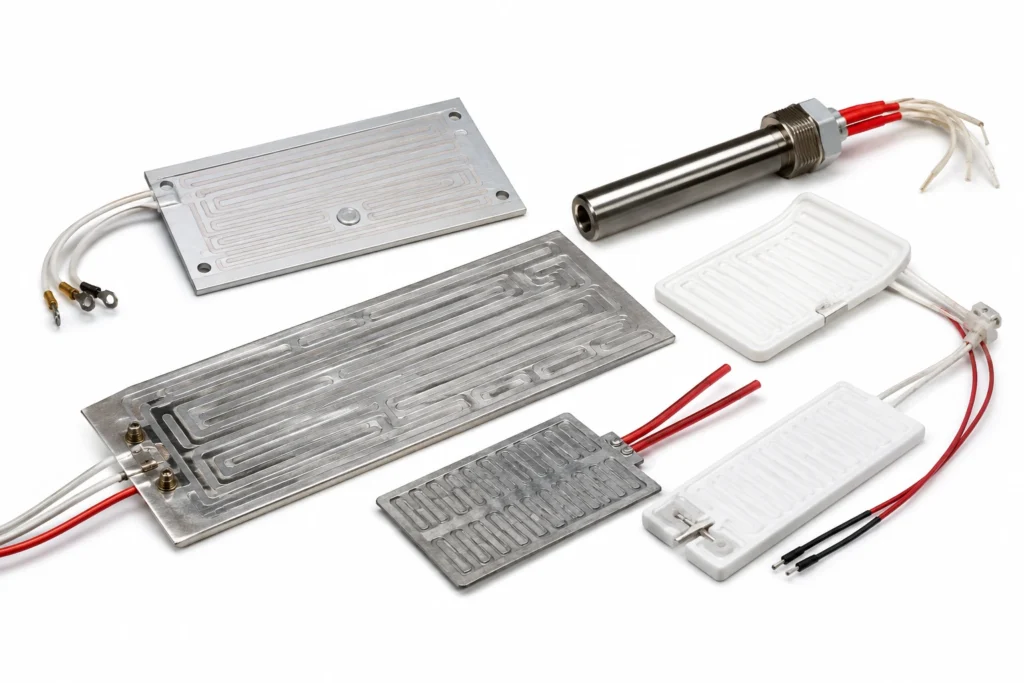
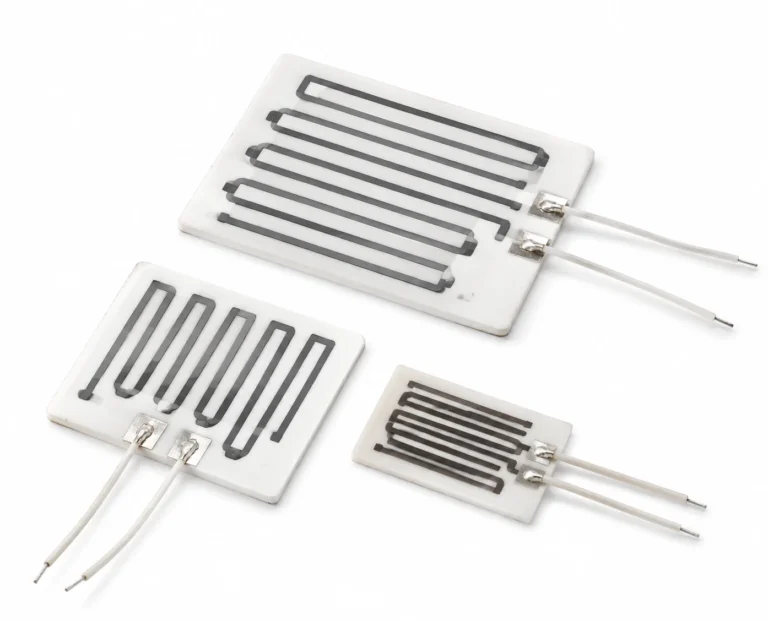
View standards →Thick Film Heaters
Resistor and diele…
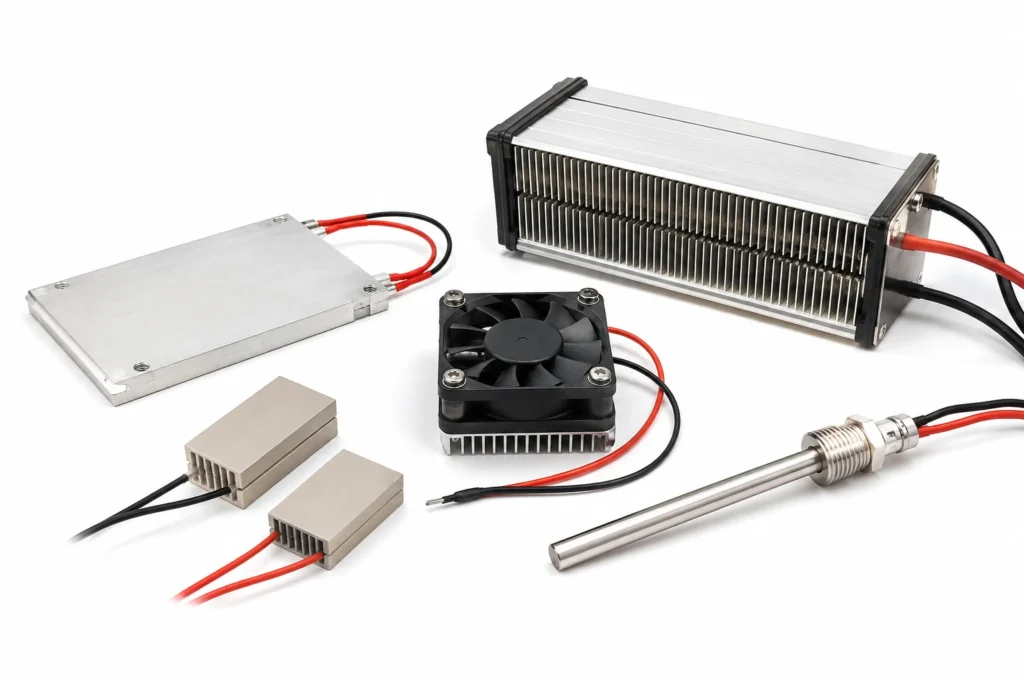
View standards →PTC Heaters
Self-regulating ba…
View standards →Epoxy Heating Plates
Resistance element…
View standards →PET Film Heaters
Printed carbon or …
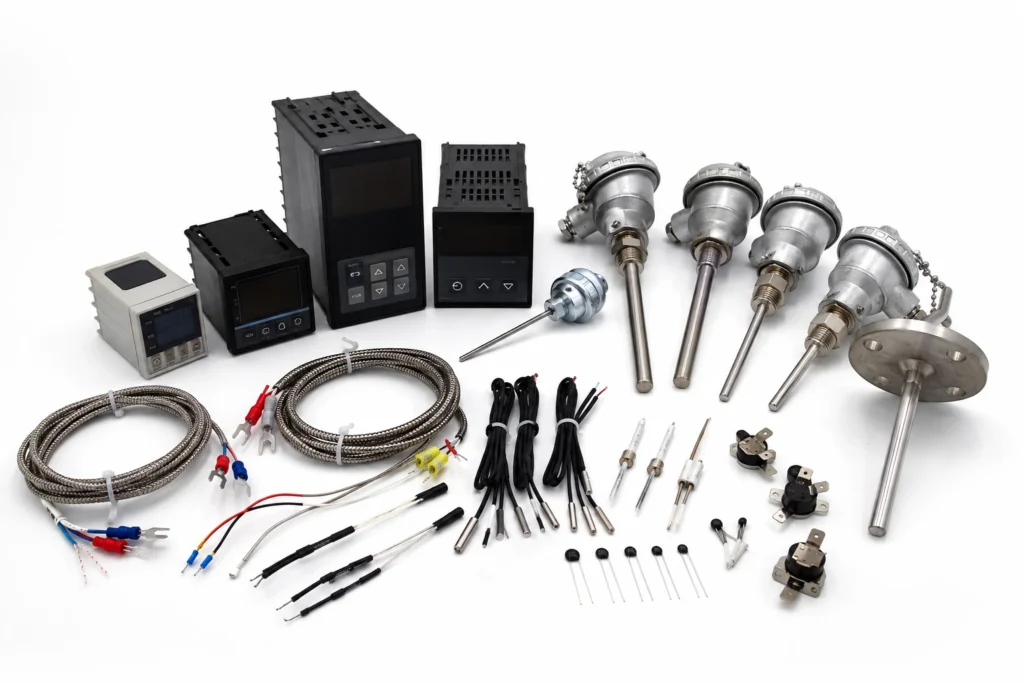
View standards →Temperature Sensing & Control
The half of a heat…
View standards →Find the heater for your machine
Twelve of the duties we build for most often. Each one opens the application guide for that construction — what it holds, how it is attached, how it is protected, and where it stops being the right answer.
Why Heating Film
A heater factory that answers with numbers rather than adjectives.
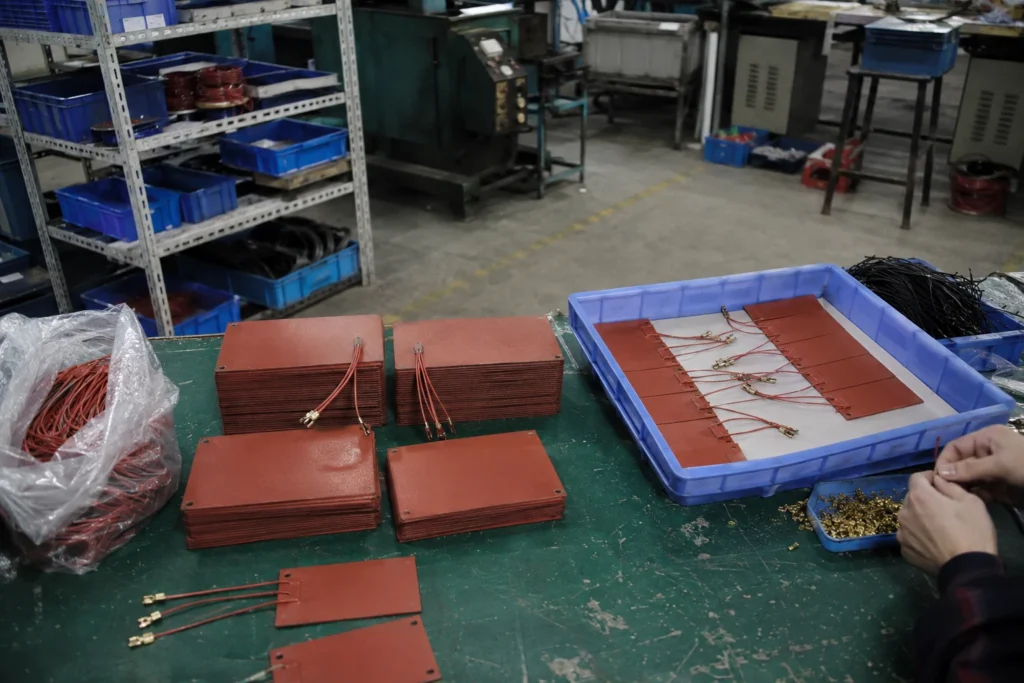
01
Every construction under one roof
Silicone, polyimide, PET, thick film, PTC and epoxy — so the recommendation is the one the duty needs, not the one the factory happens to make.
02
Watt density stated honestly
Two figures on every construction: what it survives in free air, and what it survives bonded to a heat sink. They differ by several times, and quoting only the second is how these parts get specified into failure.
03
Drawing in, quotation out
Send an outline and the supply voltage; a quotation with the watt density checked against the construction comes back within one business day, and samples in 7 to 10 days from an approved drawing.
Inside the plant
How your heaters are made
Every heater we ship moves through the same sequence, in our own plant. The controls listed under each stage are the ones that decide whether a heater holds its resistance, its uniformity and its insulation — not marketing copy.
-
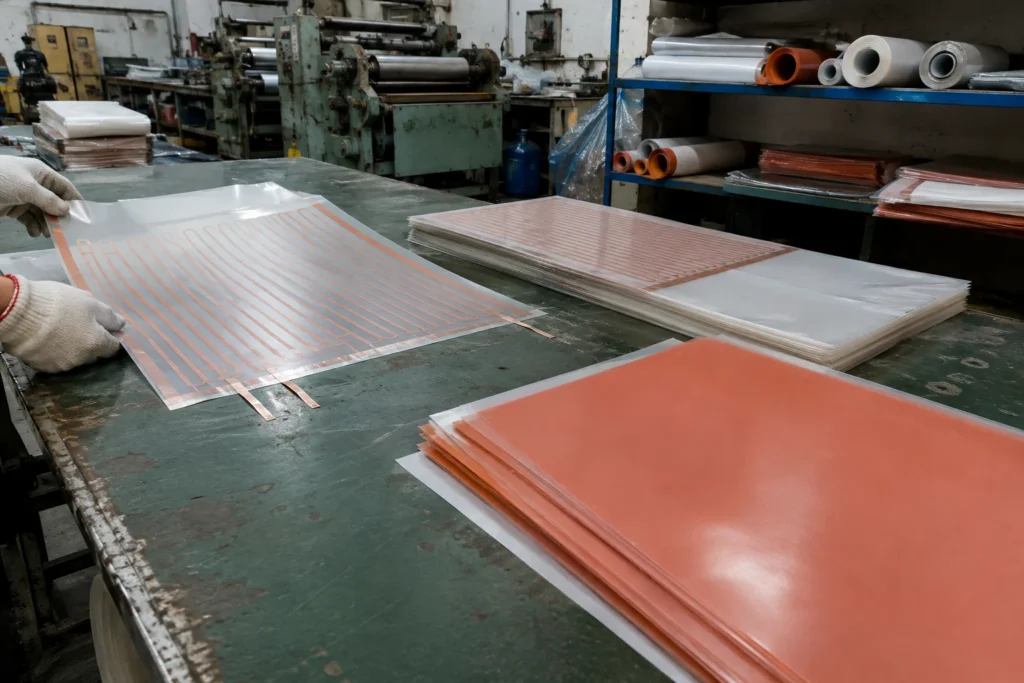
01 Circuit design & material preparation
The customer outline comes in as a drawing or a DXF, and the element is laid out inside it: conductor gauge from the voltage, path length from the resistance, pitch from the watt density wanted at each part of the surface. Where the load needs more heat at the edges than in the middle, that is decided here, in the geometry, not later with more power. The insulation, the foil or wire and the adhesive for that build are then drawn from stock and staged together as one kit.
Calculated resistance and watt density checked against the construction limits before any tooling is cut; every material lot recorded against the works order.
-
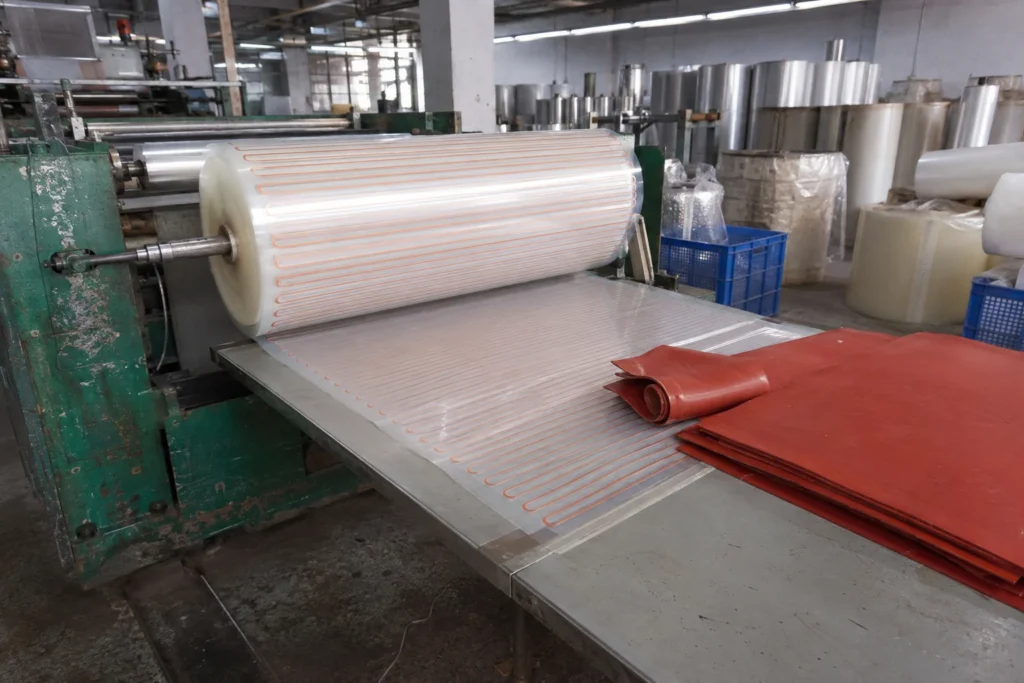
02 Roll feeding & sheet handling
Film and silicone sheet are fed from the roll and cut to sheet, handled flat and kept clean. A fingerprint, a crease or a speck of dust trapped under the insulation becomes a void after pressing, and a void is a place the heat cannot leave from.
Sheet cleanliness and flatness checked at feed; material lot number stays with the sheet through to the finished part.
-
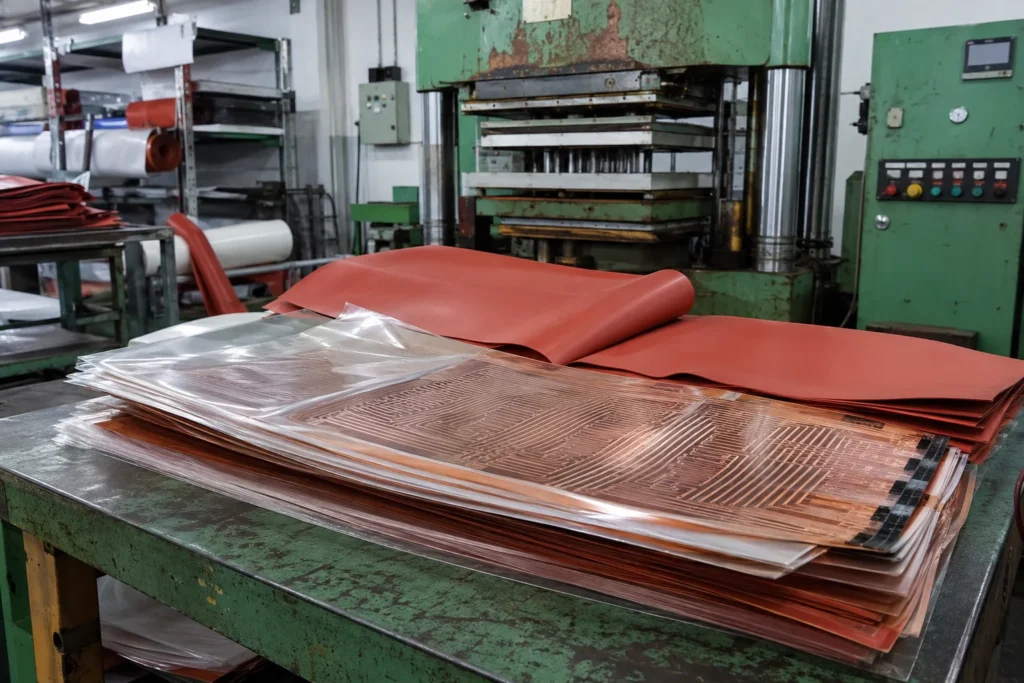
03 Element preparation & lay-up
Wire-wound elements are wound on a glass carrier at the calculated pitch; etched-foil circuits are photo-imaged and etched from Inconel or copper foil to a trace width held within 0.05 mm. That tolerance is what makes the resistance repeatable from lot to lot, which is what makes the temperature repeatable. The element and its sensor are then stacked between the insulation sheets in the order the drawing specifies.
Trace width and element resistance measured before lamination — a circuit out of tolerance is scrapped here, not after it is sealed inside the part.
-
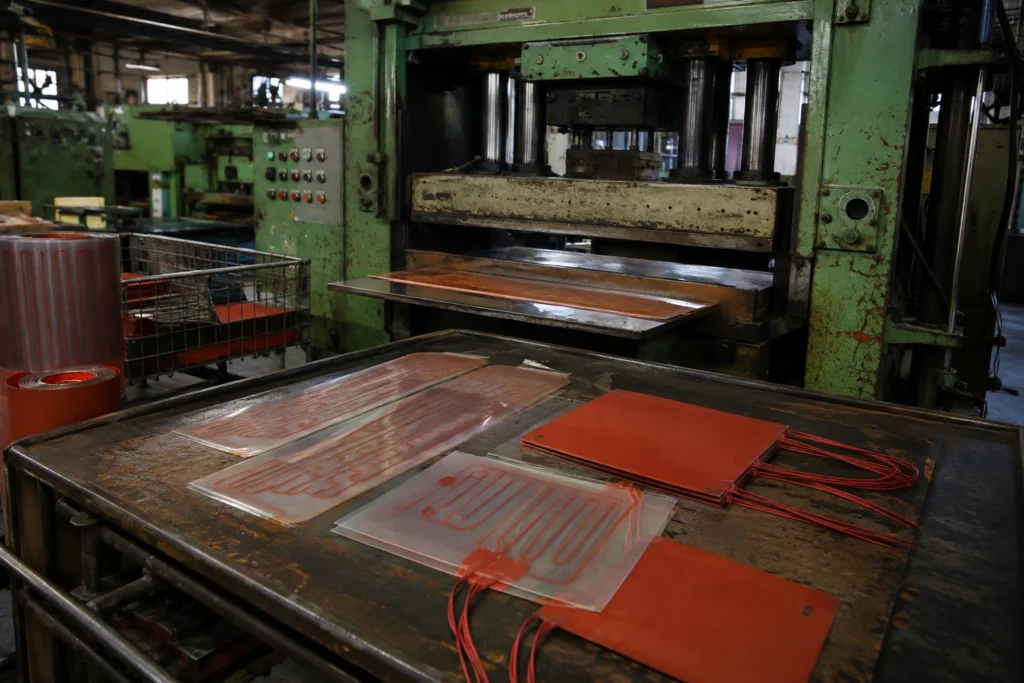
04 Lamination & vulcanising
The lay-up is pressed under heat: silicone is vulcanised, polyimide and PET are laminated with a high temperature adhesive, epoxy plates are potted under vacuum so no voids are left anywhere in the heat path. A void is not a cosmetic defect — it is a place the heat cannot leave from, and it becomes the hot spot that ends the part.
Press temperature, pressure and dwell recorded per lot; potted plates checked for voids.
-
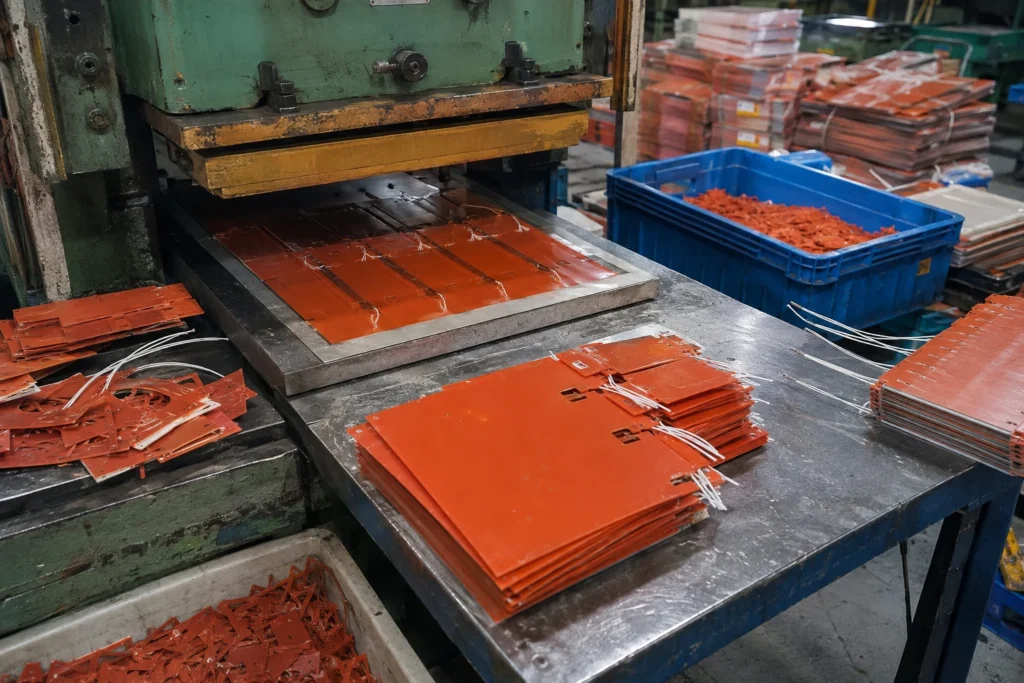
05 Die cutting
The outline is die cut with radiused corners — a die does not cut a sharp inside corner, and a sharp corner in a film is where a tear starts. Cut-outs, sensor windows and mounting holes come out in the same operation, which is why they have to be on the drawing before the tool is made rather than added afterwards.
Outline to ±0.5 mm on film, ±1.5 mm on silicone, gauged against the first-off sample for the tool.
-
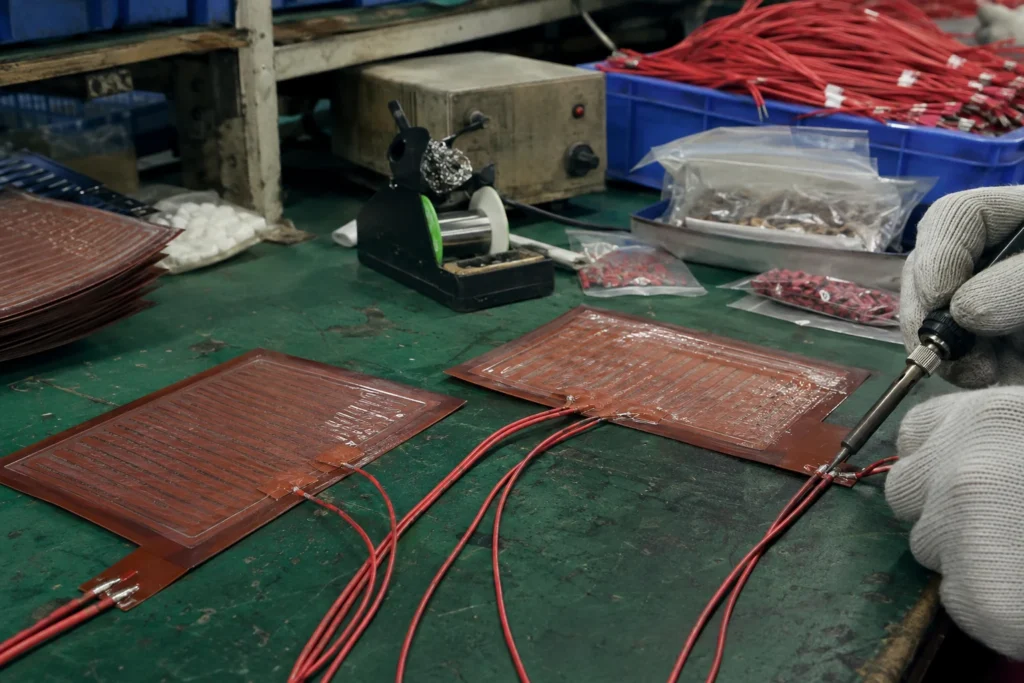
06 Leads, terminals & connectors
Leads are crimped or soldered at the exit and strain relieved, then connectors are fitted to the harness drawing so the assembly line never has to solder. The lead is worth as much attention as the heater: its jacket rating is frequently the lowest temperature limit in the whole assembly, and the exit is where a flexible heater is handled and where it fails if the relief is wrong.
Lead pull-out tested per lot; jacket rating and connector part number checked against the drawing rather than against the last order.
-
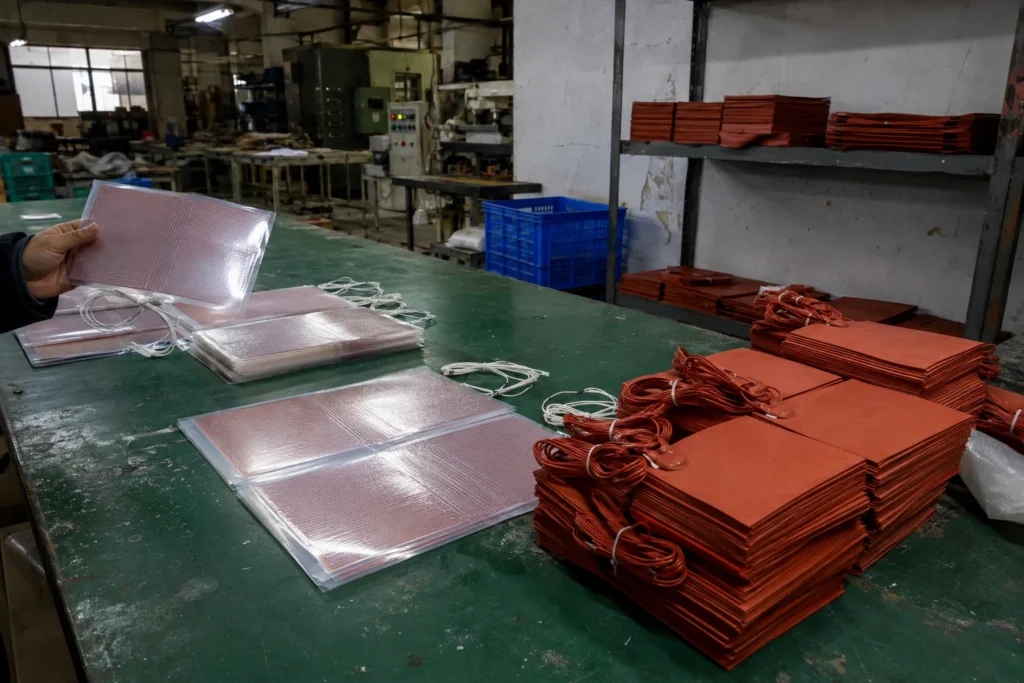
07 Electrical test — every unit
Every heater is measured for resistance against the drawing, then held at its dielectric test voltage for one minute element-to-surface, then measured again for insulation resistance. All three on every piece rather than on a sample, because a heater that fails insulation in service fails it into whatever it is bonded to. Units are sorted and any that miss the ordered tolerance are pulled here.
Resistance to the ordered tolerance; dielectric withstand and insulation resistance above 100 MΩ, logged per unit.
-
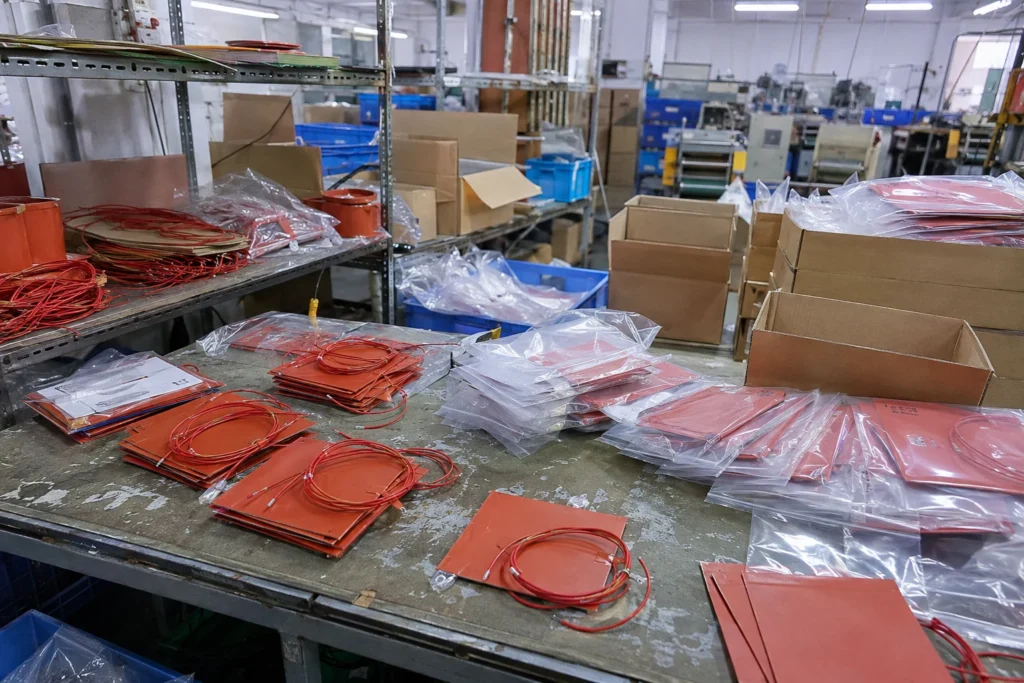
08 Thermal imaging, packing & dispatch
Sample units from every lot are run under power on a representative heat sink and imaged, because a hot spot is invisible to a resistance meter and obvious to a thermal camera. The lot then ships with its test record, and the lot number travels in the carton so a field failure can be traced back to the reel of foil it came from.
Thermal uniformity imaged per lot; full traceability from carton back to raw material.
10 x 10 mm
Smallest outline
1 x 2 m
Largest single piece
-50 to +400 °C
Working range across constructions
7-10 days
Samples from approved drawing
From the blog
All articles →
Heater Guides & Engineering Notes
Selection guides, standards explained, materials and coatings, torque and installation practice.
Which Flexible Heater Fits -50°C to 400°C Duty?
A selection guide fo…
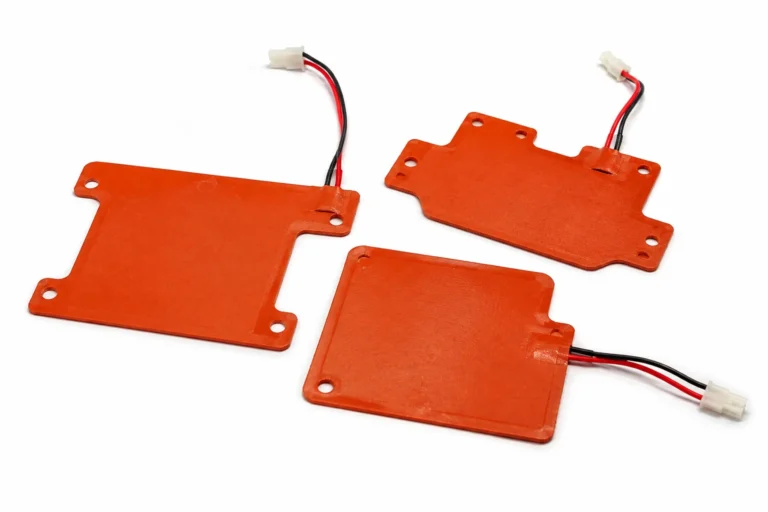 Film Heating Materials From 10 x 10 mm to 1 x 2 m
Material and constru…
Film Heating Materials From 10 x 10 mm to 1 x 2 m
Material and constru…
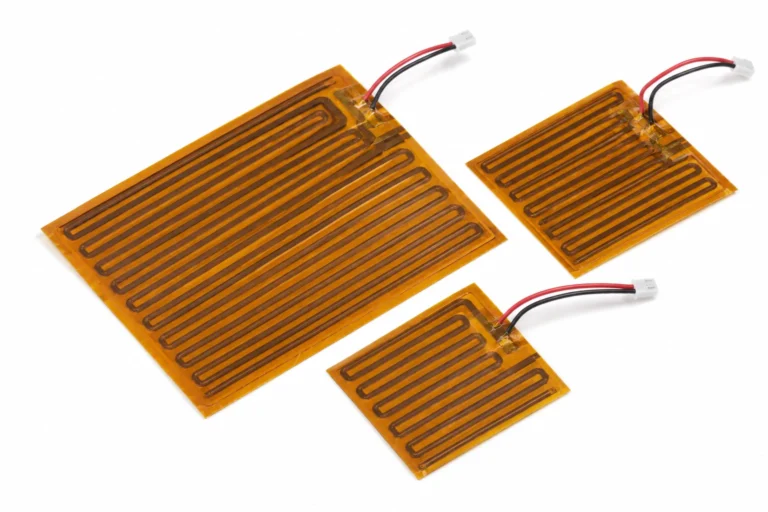 Battery Warmup Stays Uniform With a 0.15 mm Film Heater
A material and const…
Battery Warmup Stays Uniform With a 0.15 mm Film Heater
A material and const…
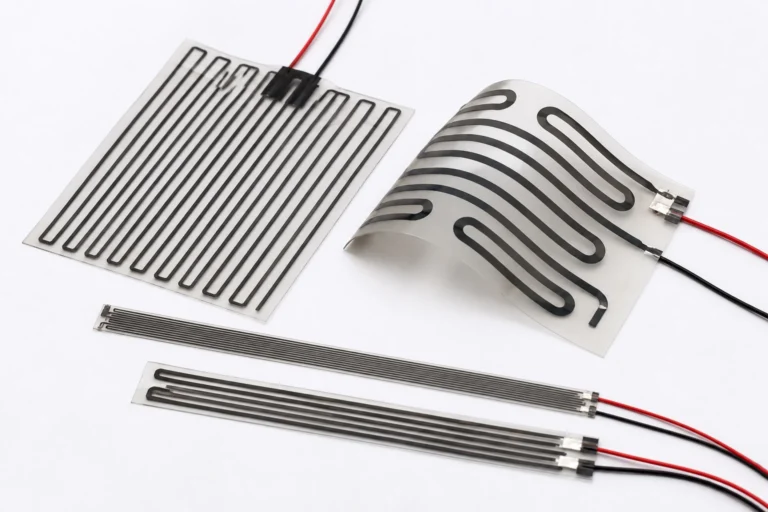 How Do Custom Medical and Lab Heaters Get Ordered in 7-10 Days?
A practical ordering…
How Do Custom Medical and Lab Heaters Get Ordered in 7-10 Days?
A practical ordering…
About Heating Film
A heating element factory built around one idea: publish the limits, then build inside them.
We build silicone rubber heaters, polyimide and PET film heaters, thick film heaters on stainless and ceramic, PTC assemblies, epoxy heating plates and the sensors and controls that go with them — every one of them to a customer drawing rather than from a size list.
Our team responds to inquiries within one business day. Specifications include the standard, material, finish, lead time and price, so you can move from selection to purchase in one conversation.
44Constructions across 7 categories
600+Voltage, insulation, temperature & certification guides
1 dayQuote turnaround
Contact Us
Send a quote request from any product page, or reach the team directly.
Hours
Monday – Friday
9:00 – 18:00 your local time
Quote requests
Use the heater selector or any product page's quote form — typically answered within one business day.